How to Set Up Lore on AWS Using S3 as Storage
In this setup, we describe how to configure your AWS environment properly including warming up S3 and DynamoDB so that you can use Lore with a scalable S3 storage solution.
July 9, 2026
9
min read

Fahrenheit 451 is a short film directed by Seiji Anderson and David Weinstock. Based on Ray Bradbury’s novel, it serves as a warning against a society built on censorship and anti-intellectualism. Told in a cyberpunk style, it tells the story of an agent on a mission to destroy knowledge that threatens the current rulers of society.
The short film was made using Unreal Engine by a crew of eight people, four of whom were Unreal Engine artists. Anchorpoint was used to manage the versions of the Unreal Engine project.
Dave:
We both come from motion design and CG studio backgrounds. We met before COVID and started collaborating around 2020 while working at the same studio. Since then, we’ve worked together on personal shorts and professional studio projects.
Seiji:
Our collaboration has been ongoing for about five years. Over time, we also built a small group of like-minded collaborators we bring in when needed.
Dave:
We use it for layout, lighting, animation, cameras, and rendering. The real-time feedback is one advantage and that you don’t need a render farm. Overall the iteration times are faster because scene optimization is not needed compared to traditional DCC workflows. Unreal can load in large scenes, where DCCs reach their limits quickly and start to crash. On Unreal we can load multiple objects with each containing millions of polygons and it just runs fine.
Seiji:
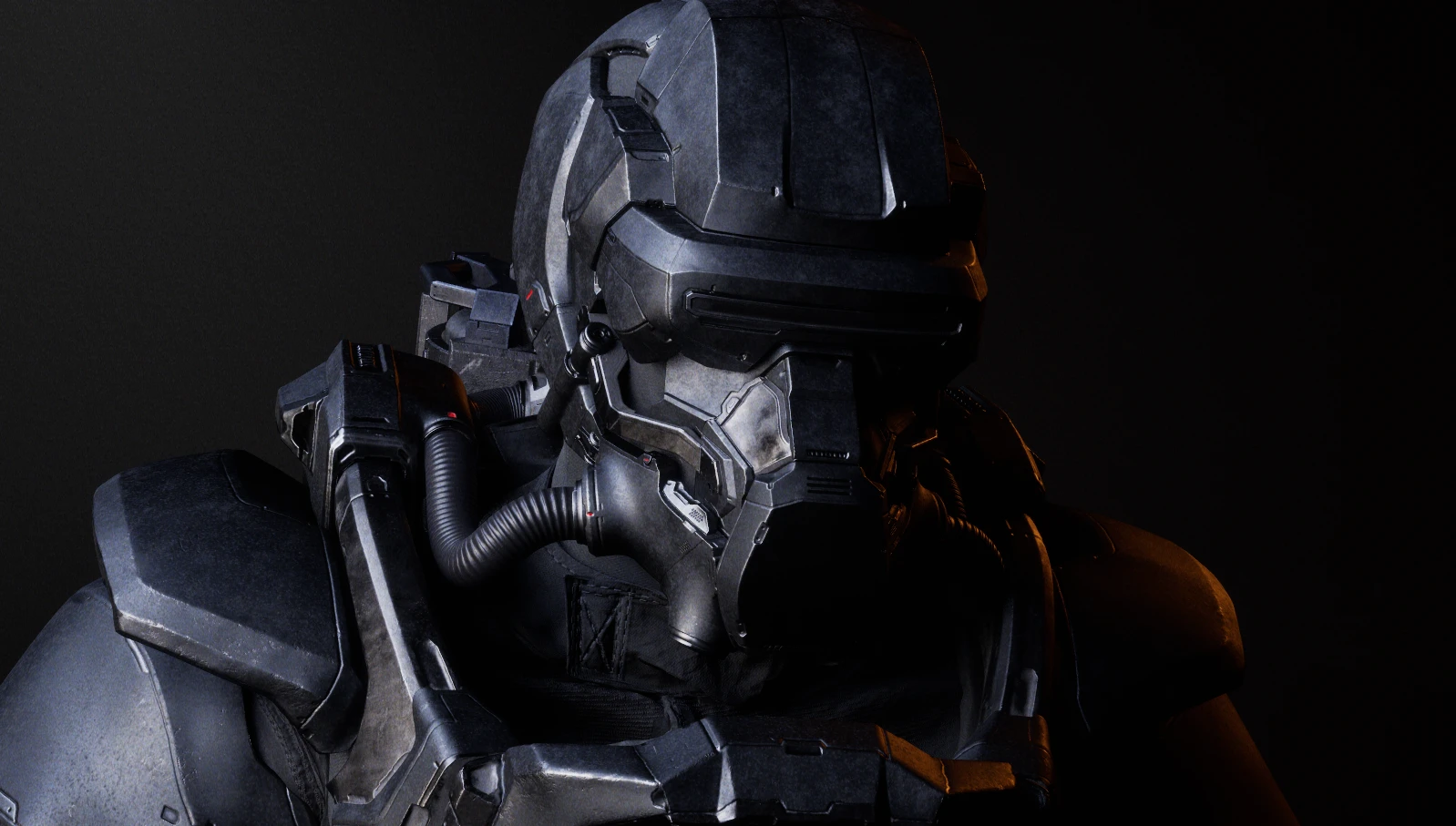
For character work, I used ZBrush for sculpting and Substance Painter for texturing. Houdini was used for fire and VDB simulations that Unreal couldn’t handle well. That’s the part where we use offline rendering.
Seiji:
I started the project around summer 2022. The first~1.5 years were spent almost entirely on character development like learning ZBrush, building the helmet and armor, texturing, and getting everything to a consistent level of detail.
Dave:
Once the character was finished, we moved into actual short-film production. The Unreal Engine production phase took about one year, with most shots blocked and laid out within the first 6–8 weeks, and the remaining time spent on polishing, animation, simulations, lighting, and sound.
Dave:
The Unreal project ended up at around 220 GB. Of course this does not include things such as VDB caches.
Dave:
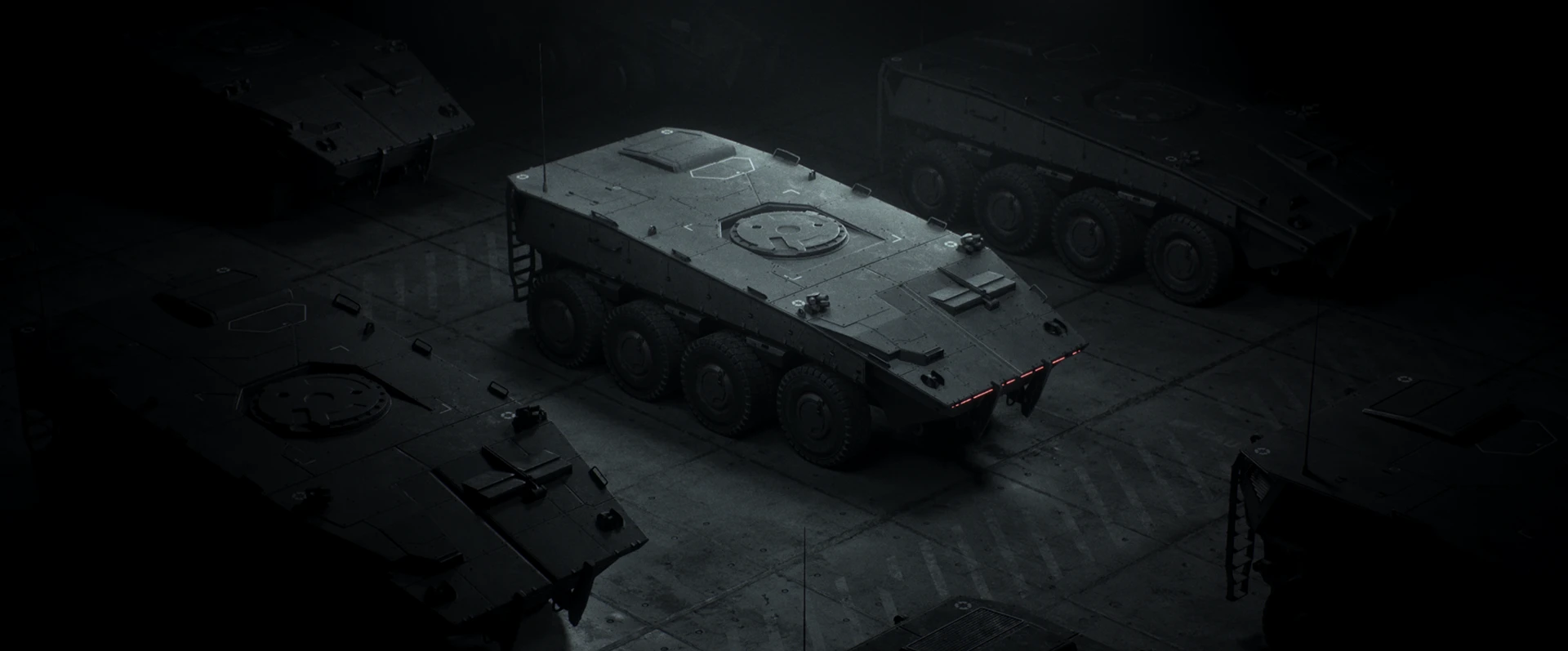
Blender and Cinema 4D were mainly used for modeling environments, props, and hard-surface assets. The assets were built with a game-style mindset rather than traditional offline-render workflows—mid-poly meshes, Nanite-friendly geometry, and no Sub-D-heavy setups.
Seiji:
Houdini was used specifically for simulation work that Unreal couldn’t handle at the required quality level—mainly fire, burning objects, melting plastic, and large VDB-based effects. This part was rendered in Karma.
Seiji:
USD was effectively unavoidable inside Houdini/Karma, but that didn’t translate into using USD as a broader pipeline format.
Dave:
USD wasn’t a core part of the workflow. In motion design, it’s still not widely adopted, and the team stuck to formats they knew were stable. While they see USD as a likely future direction, it wasn’t necessary for this project. We rather rely on FBX and Alembic for now.
The complete version history of the project
Dave:
Anchorpoint was used as the central version control system for the project. Once we committed to Unreal Engine, it was clear that we needed proper version control—passing Unreal projects around via Dropbox is just too risky. We versioned the entire Unreal project in Anchorpoint, including levels, assets, and project files.
Seiji:
We had experience with Perforce at larger studios, but it’s heavy and very developer-focused. For a small team, we wanted something simpler and more artist-friendly. Anchorpoint fit that need.
Thank you so much for the interview. Read more about Fahrenheit 451 on Behance and take a look at the portfolio page of Seiji and Dave.