Teamcenter alternatives in 2026
Discover our top five Teamcenter alternatives, featuring the pros and cons of each and transparent pricing models for hardware and 3D creators.
July 6, 2026
6
min read

We are contributing to the new version control system from Epic Games
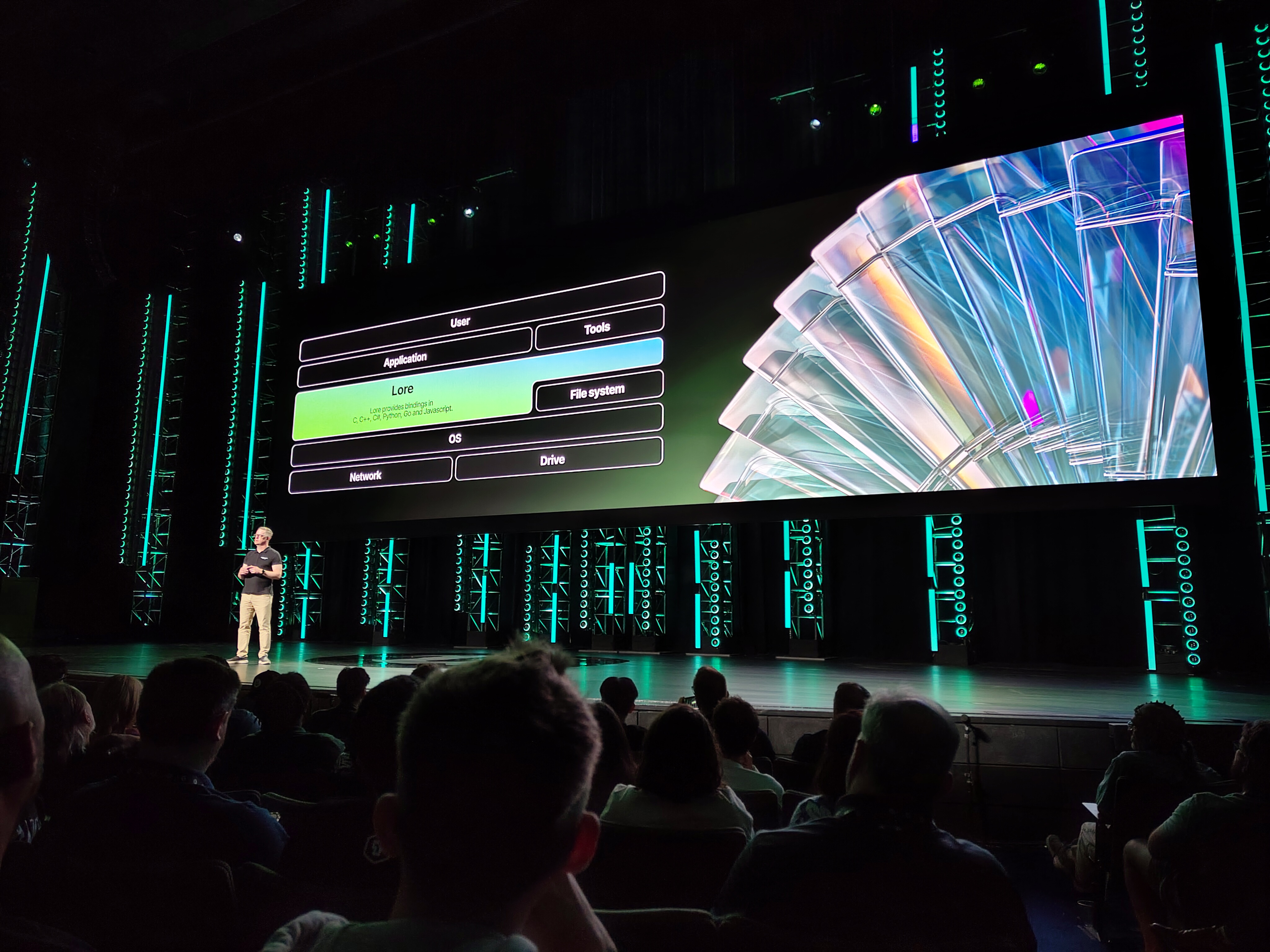
Today at Unreal Fest Chicago, Epic Games released an open source version control system called “Lore”. It’s been designed up from the ground to support large content-based workflows but with modern concepts that we all know from the world of Git. Lore is not a complete newbie. It has been already in use for the Unreal Editor for Fortnite under the name “Unreal Revision Control” (URC). A huge amount of UEFN developers are already using it and now Epic is opening up this technology for a wider audience. Take a look at the GitHub repository for Lore.
Binary assets are first-class
Files are content-addressed and chunked, so editing a few KB inside a multi-GB asset only re-uploads what changed — and identical data is deduped whether it's text or a gigabyte of binary. With sparse, lazy fetching you only pull what you touch, so code and huge art/media live in one repo with no LFS-style hacks.
Multi-tenant by construction
Every repo is its own "partition" that acts as the access boundary, with dedup kept underneath it. So many repos share one backend and identical bytes are stored once — but knowing a content hash never gets you another tenant's data. Most
VCSs leave isolation to your infra; here it's baked into the storage layer.
API-first (unlike P4 and Git)
The C ABI is the primary artifact — the CLI, server, and every SDK (Rust, Python, JS, C#, Go) are thin layers over it. The formats and wire protocols are a versioned spec under MIT, so anyone can reimplement the client, server, or backend.
Perforce is proprietary end-to-end and Git only contracts its wire protocol — Lore is open and reimplementable by design.
It’s pretty similar to the launch of Git in in 2005. Developed by Linus Torvalds, it started as a tool to manage the source code of the Linux kernel, as current version control solutions did not match the performance and proprietary solutions came with lock in effects. From that on an ecosystem started to grow around Git with platforms such as GitHub, making Git the most popular version control system in the world.
Git succeeded not only because it was a open source and extremely fast, but because an ecosystem grew around it. Linus mentioned in an interview, that the community and especially the Ruby people contributed a lot to it’s success. Lore ticks the first two checkboxes that Git did 20 years ago and now it’s time to build the ecosystem.
Anchorpoint has already proven as a production solution for artists and even developers that are relying on Git for their games, visualizations or other interactive projects. We want to bring our expertise to Lore and start by building the first desktop client for artists and designers. You can already sign up and join the waitlist.
Today at Unreal Fest Chicago, Epic Games released an open source version control system called “Lore”. It’s been designed up from the ground to support large content-based workflows but with modern concepts that we all know from the world of Git. Lore is not a complete newbie. It has been already in use for the Unreal Editor for Fortnite under the name “Unreal Revision Control” (URC). A huge amount of UEFN developers are already using it and now Epic is opening up this technology for a wider audience.
It’s pretty similar to the launch of Git in in 2005. Developed by Linus Torvalds, it started as a tool to manage the source code of the Linux kernel, as current version control solutions did not match the performance and proprietary solutions came with lock in effects. From that on an ecosystem started to grow around Git with platforms such as GitHub, making Git the most popular version control system in the world.
Git succeeded not only because it was a open source and extremely fast, but because an ecosystem grew around it. Linus mentioned in an interview, that the community and especially the Ruby people contributed a lot to it’s success. Lore ticks the first two checkboxes that Git did 20 years ago and now it’s time to build the ecosystem.
Anchorpoint has already proven as a production solution for artists and even developers that are relying on Git for their games, visualizations or other interactive projects. We want to bring our expertise to Lore and start by building the first desktop client for artists and designers. You can already sign up and join the waitlist.