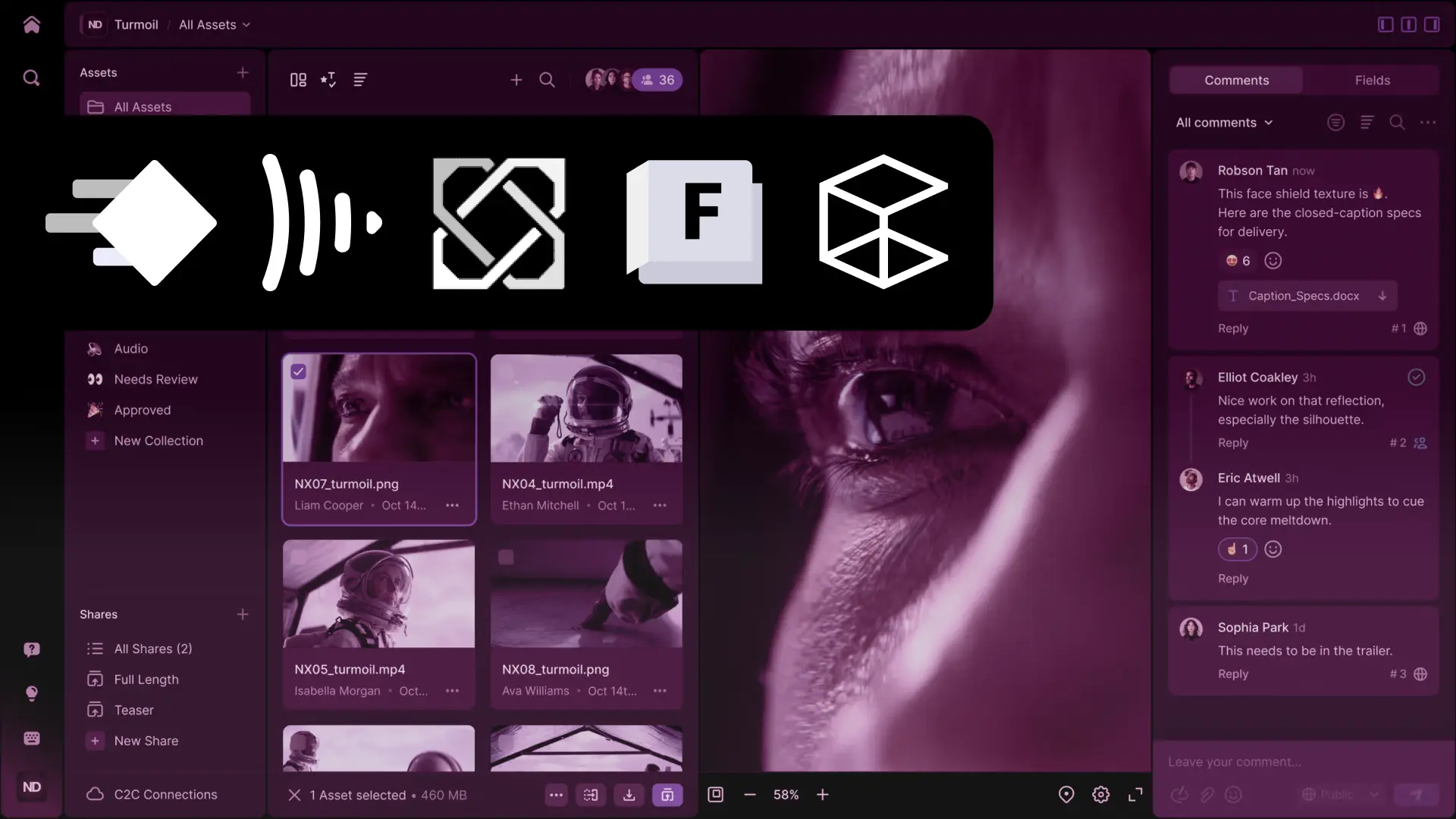
Today I heard the sad news that Mudstack is shutting down. The platform will no longer be available after September 28, 2026. As a founder, I can relate to what a hard time this must be for the whole team who have put effort and dedication into building a tool for the game industry. This means taking on opportunity costs, being brave enough to start something new, and staying strong through the hard times our industry is currently going through.
I don't want to take advantage of that situation. In case you are using Mudstack and need an alternative solution, give Anchorpoint a try. It's similar feature-wise, but it's compatible with Git right now, and it will also be compatible with Lore.
Relying on open source standards
While using Git as a storage backend, you don't suffer any lock-in effects. You can use GitHub, GitLab, Cursor Origin, or whatever you like to store your data. We've scaled it to terabytes in size. If we ever shut down, you'll still be in control of your data.
Being a profitable company
Anchorpoint is a mostly bootstrapped and, more importantly, profitable company. We never received venture capital money that pushed us to grow at all costs. We can withstand the hard times the games industry is in right now, and whatever comes next.
How Anchorpoint compares to Mudstack
Here is an overview of how Anchorpoint compares to Mudstack, feature by feature:
| Area |
Mudstack |
Anchorpoint |
| Visual previews |
In-browser 3D inspection — wireframes, normals, UVs — without opening the file |
Native thumbnails for 30+ formats (Blend, FBX, GLTF, Uasset, PSD, Substance, EXR/HDR, video), with a manual override for the rest |
| Version control |
Proprietary, non-destructive versioning — file-level, not project-level, and only inside Mudstack |
Real Git + Git LFS — your repo, on a server you choose |
| Handling large repositories |
Storage tiers up to 20TB+; no published detail on how large binaries are handled |
Shallow clone, sparse/selective checkout, LFS background prefetch, and automatic cache cleanup — documented for 1TB+ repositories |
| File locking |
Automatic smart-locking on checkout |
Automatic or manual locking on checkout, blocks merge conflicts on binaries |
| Single file history |
File-level versioning is core to the product; UI detail not published |
Per-file Versions panel — browse every revision, then Revert, Restore, or Restore as Copy to compare side by side |
| Integrations |
Slack, Jira, webhooks, open API — general-purpose, no native DCC/engine plugins |
Native panels in Unreal, Unity, Blender, Cinema 4D, and Maya, plus Jira, GitHub/GitLab/Azure DevOps/Gitea, and an API |
| Tagging, descriptions |
AI auto-tagging from naming conventions, plus manual tags and libraries |
Tags, notes, and descriptions, use your own OpenAI API key for AI tagging. |
| Notifications |
Built-in alerts for review requests, change requests, approvals, and @mentions |
Built-in notification system for status changes, commits and comments with @mentions |
What you need to do if you want to migrate
Mudstack's own shutdown notice gives you until September 28, 2026 to log in and retrieve every workspace. I encourage you to book a demo with me, so we can handle the situation on a case-by-case basis.
The overall recommendation is:
- Pick a Git hosting provider such as GitHub, Azure DevOps, or a self-hosted Git server
- Download Anchorpoint and follow one of our quick-start guides
- Download your entire Mudstack project so you have every file at its latest version
- Remove the .mudstack folder and the .mudignore file, if you have one
- Create a new project in Anchorpoint and point it to your previous Mudstack project folder
- Push it to the Git server of your choice
This is the easiest way to migrate, but it won't transfer your full file version history or metadata such as tags.
For indie users, we offer a 50% discount on our Team plan if your funding and revenue are below €100,000.
What is the future of Anchorpoint?
I wanted to write a longer blog post about this, but due to this event, here's a sneak peek. We're investing in the product more than ever. As CEO, I've again been personally involved in designing and coding, like when we started the company.
We're fully rewriting the application and heading toward version 2 of our product, Anchorpoint. The first step is to publish our Lore client. Then, Git and all the asset management features will follow soon. It's a huge undertaking, but it gives us a much better foundation for a product that can easily adapt to the new era of AI agents.
I will write a more comprehensive article soon. Besides that, feel free to email me personally if you need help with your Mudstack migration.